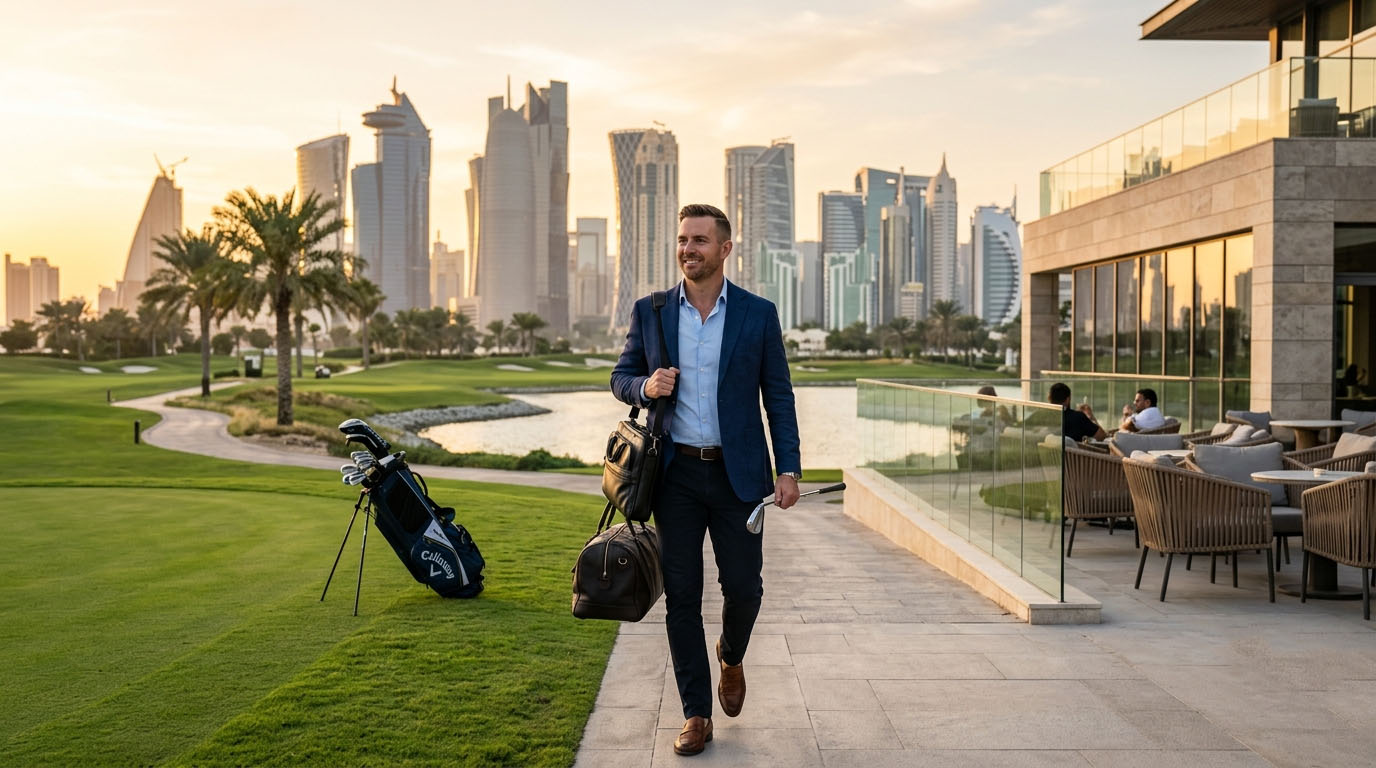
Business travel often gets reduced to airports, hotel lobbies, coffee meetings, and a blur of presentations. That version of a work trip is efficient, but it can also make every destination feel the same. One of the easiest ways to change that is to build a little recreation into the schedule, not as a luxury, but as part of a smarter travel rhythm. Golf fits that role surprisingly well. It gives professionals a reason to step outside the conference room, move their bodies after long flights, and experience a city in a slower, more grounded way. In a place like Qatar, where business travel regularly overlaps with hospitality, design, dining, and urban exploration, recreational golf can turn a practical trip into one that feels more balanced and memorable.
Quick Summary
- Golf can fit neatly into business travel without taking over the whole trip.
- It works best when planned around meeting schedules, climate, and location.
- In Qatar, golf can pair naturally with Doha dining, waterfront walks, and cultural stops.
- A short round, lesson, or practice session can be enough to reset your energy during a work trip.
- The best business trips leave room for productivity, recovery, and a genuine sense of place.
Why Golf Works So Well on a Work Trip
Not every recreational activity fits business travel. Some require a full day, specialist equipment, or a long trip out of the city. Golf is different because it can be scaled. You can commit to a full round if you have a free afternoon, but you can also book a driving range session, a short practice block, or even an introductory lesson. That flexibility makes it useful for professionals whose calendars are never entirely predictable. If a meeting ends early, golf can fill the gap with something more restorative than scrolling through email in a café. If the trip includes a client with similar interests, it can also create a more relaxed setting for conversation.
There is also a practical side to it. Business travel often involves long periods of sitting, whether on flights, in cars, or in meeting rooms. Golf breaks that pattern. Walking, stretching through swings, and spending time outdoors can make a traveler feel human again after a dense workday. Even if someone is not chasing performance or a low score, the game offers a structure for downtime. It gives the mind one thing to focus on that is not work, which is often exactly what makes the return to work sharper.
For professionals who already enjoy the sport, that benefit is obvious. For those who are curious but inexperienced, it can still be worthwhile. A travel schedule does not need to revolve around elite golf. A beginner friendly range session or a lesson can deliver the same reset. That is one reason examples from places where golf in Singapore is built into a wider urban lifestyle can be useful to business travelers more broadly, because they show how the sport can work as a flexible leisure option rather than a full holiday commitment.
Business Travel Feels Better When the City Is Part of the Trip
A work trip becomes more enjoyable when the destination itself matters. Qatar is a good example because many business visitors spend time in Doha, where modern business infrastructure sits close to museums, waterfront promenades, hotels, shopping districts, and a growing food scene. That creates room for a different kind of itinerary. You can handle meetings in the morning, reserve a late afternoon for recreation, and still have the evening free for dinner or a walk. Instead of dividing the trip into work versus free time, it starts to feel like a continuous day with different gears.
This matters because many professionals now travel with a stronger awareness of energy management. Productivity on the road is not only about how many appointments fit into a calendar. It is also about staying clear headed across time zones, sleeping well, and avoiding the stale feeling that comes from spending every spare hour indoors. In Qatar, where hospitality and business travel often intersect, that balance is especially relevant. Travelers already think about where to eat, which neighborhood to stay in, and how to move around Doha efficiently. Adding golf to that mix is less of a radical change than it sounds. It is just another way of shaping the trip around quality of time.
That broader approach also connects well with the local style of business travel in Doha. Meetings often happen in hotels, mixed use districts, or business areas that are close to dining and leisure options. A traveler who plans carefully can move from a morning presentation to lunch, from lunch to a late afternoon golf session, and then into an evening meeting or social dinner without feeling rushed. If you are trying to understand how to structure time well during a short visit, a guide to short layovers in Qatar can be surprisingly relevant because it encourages the same mindset, make the hours count, keep logistics simple, and choose experiences that fit the pace of the city.
What Recreational Golf Adds That a Hotel Gym Usually Does Not
Most business hotels have a gym, and that can certainly help on the road. But golf offers something different. A treadmill session is useful for routine. Golf is useful for context. It gets you outside. It slows down the mental tempo. It creates small moments of concentration without the intensity of formal work. You are still doing something structured, but the stakes are lower and the environment is less repetitive. That change matters when your day has already been full of decision making.
There is also a social advantage. Golf is one of the few recreational activities that can be either solitary or shared without awkwardness. You can go alone if you want quiet time. You can invite a colleague or client if you want a more informal setting to continue a conversation. You can even join a lesson or practice session if you want a low pressure introduction to the sport. In all cases, it works as a bridge between business mode and personal time.
For some travelers, the biggest benefit is simply mental decompression. A work trip can be surprisingly claustrophobic. You move from airport to car, car to lobby, lobby to meeting room, meeting room to restaurant, then back to the hotel. Golf breaks that enclosed pattern. A course, practice facility, or range introduces light, distance, and movement. That can be enough to reset the mood of the entire trip.
How to Build Golf Into a Qatar Business Trip Without Wasting Time
The key is not to treat golf as a separate vacation layered awkwardly on top of work. It needs to fit the trip you already have. That means paying attention to schedule density, travel times inside the city, weather, and your own energy level. In Doha, where business visitors may only have two or three days, a smart golf plan is usually a short one. The goal is not to squeeze in as much as possible. The goal is to make one part of the trip feel more enjoyable and less repetitive.
| Trip Situation | Best Golf Option | Why It Works |
|---|---|---|
| One free morning before afternoon meetings | Early practice session or short lesson | Keeps the day light and avoids fatigue before work |
| Client relationship trip with a flexible afternoon | Shared round or paired practice block | Creates conversation space outside the boardroom |
| Packed conference schedule | Driving range session in the evening | Short, restorative, and easier to fit around events |
| Extended stay with one open weekend day | Full round plus dinner nearby | Turns the trip into a fuller local experience |
The table makes one point clear. Recreational golf during business travel should be matched to the shape of the trip, not forced into it. If you only have ninety minutes, use those ninety minutes well. If you have half a day, then golf can become a bigger feature. The mistake is assuming that the only worthwhile version is a traditional full round. For business travelers, smaller formats are often better.
Three Smart Ways to Plan Around Meetings
Once you decide that golf belongs somewhere in the trip, the next step is scheduling it with discipline. That means treating it like any other meaningful appointment, while still leaving enough flexibility for work. A good rule is to build it around your least fragile block of time, not your most optimistic one. If your meetings often run late, do not book a tee time thirty minutes after your final session is supposed to end.
1. Choose the most predictable window in the trip. This is often the morning after arrival if you land the night before, or the afternoon before a departure day if your meetings are already complete. Predictability matters more than ambition.
2. Stay close to where you are already working or staying. A one hour golf activity with a forty minute transfer each way is not efficient. Recreational golf should reduce friction, not create more of it.
3. Use golf as a buffer between business blocks. If you have a serious meeting followed by a client dinner, a short practice session in between can act as a reset. It changes your pace without taking you fully out of the day.
This planning mindset also works well with the way many people already organize time in Doha. Short visits often depend on tight logistics, especially when work is mixed with dining, shopping, or a little sightseeing. That is why articles on travel buffers in Qatar matter even outside event planning. They reinforce a simple principle, good days on the road are built around realistic timing, not wishful timing.
Where Golf Fits Into the Wider Shape of a Doha Work Trip
Qatar is particularly well suited to the idea of mixing business and recreation because the visitor experience is already layered. A traveler might spend the day between a hotel, a business district, and a restaurant, then head to the Corniche in the evening or visit a museum on a lighter day. Golf can slot into that same pattern. It does not have to compete with the cultural side of the trip. In fact, it works best when it supports it.
Imagine a visitor in Doha for three nights. Day one is arrival and a business dinner. Day two is packed with meetings until mid afternoon. Day three has a conference session in the morning and a free evening. Rather than treating that free time as a blank space, the traveler could use day two for a late practice session and day three for a meal by the waterfront after work. That creates rhythm. It also makes the city more visible. You stop experiencing Doha only through taxis and conference rooms.
There is value in that even for people who do not think of themselves as recreational travelers. Business trips shape how a place is remembered. If the only memory is fluorescent meeting space, the destination remains abstract. If the trip includes a walk, a meal, a golf session, or time in a neighborhood with a little atmosphere, it becomes specific. That specificity matters. It makes repeat travel feel less draining and often makes professionals more open to staying an extra day next time, either for work or personal travel.
What to Pack and Prepare Before You Go
One reason some professionals skip recreational golf on work trips is that they assume it will be logistically messy. In reality, a little preparation removes most of the friction. You do not need to travel like a tournament player. You just need to make the recreational part easy enough that you will actually follow through once meetings begin to stack up.
- Check the dress expectations of the venue before you leave, especially if you are packing light for a short business trip.
- Bring one set of clothes that can handle heat and movement comfortably without taking much luggage space.
- Keep golf shoes optional if your plan is only a lesson or range session.
- Book with weather in mind, particularly in hotter months when early morning or evening can be much more comfortable.
- Think about transport in advance so the golf slot does not create unnecessary backtracking across the city.
Preparation also includes being honest about your energy. If you are arriving from Europe, Asia, or North America and your sleep is off, a full round on the first day may not be enjoyable. A shorter practice session could be the better call. Business travel is rarely improved by overcommitting. It is improved by making a few good choices that keep the whole trip feeling manageable.
The Networking Side of Recreational Golf
Golf has long been associated with networking, sometimes to an exaggerated degree. But on business trips, there is a practical middle ground worth acknowledging. Not every client wants to spend four hours on a course, and not every professional relationship is suited to that format. Still, a shared golf activity can work very well in the right context. It offers more breathing room than a formal meeting and more structure than an open ended social drink. Conversation happens in motion, which can make it easier and more natural.
That said, the best use of golf on a business trip is not always as a networking tool. Sometimes its real value is that it improves your own presence. A traveler who has had one restorative hour outdoors may show up to dinner more relaxed, more attentive, and more pleasant to be around. That matters too. Professional relationships are affected by mood and energy as much as by talking points.
There is also a broader workplace shift behind this. Business travel is no longer viewed only as a grind to be endured. Many companies and professionals now understand that sustainable travel habits matter. People perform better when trips are designed with some thought for wellbeing, not only output. This is consistent with a wider body of guidance around travel health and work performance, including advice from organizations such as the CDC business travel guidance, which emphasizes planning, recovery, and practical ways to stay functional while on the move.
How to Keep the Trip Balanced Instead of Turning It Into Another To Do List
The irony of trying to improve a work trip is that you can easily make it more exhausting if you overplan it. A business traveler who schedules breakfast meetings, a full conference day, an ambitious golf session, a museum visit, and a late dinner all in one day has not created balance. They have just built a more attractive version of overload. Recreational golf works best when it replaces empty fatigue, not when it piles on top of it.
That is why restraint matters. Pick one or two leisure anchors for the trip and let them breathe. Maybe it is one golf session and one good dinner. Maybe it is one early round and a walk along the Corniche the next evening. Maybe it is a lesson one morning and a market visit before departure. The exact combination matters less than the pacing. A good work trip should still leave enough unclaimed time to deal with delays, follow up on messages, or simply rest.
Qatar rewards that kind of pacing. Doha is not a city that needs to be rushed through to be appreciated. A short walk, a meal in the right neighborhood, a waterfront view at dusk, or a well timed recreational activity can do more for the feel of the trip than a frantic checklist ever will. Golf belongs in that slower, more deliberate version of business travel.
Making the Return Flight Feel Different
The real test of any business trip is how you feel on the way home. If the trip was nothing but indoor meetings and hurried transfers, the return usually feels like recovery from a slog. If the trip had some shape to it, even a small amount, the memory changes. You remember the city a bit better. You feel less like you were trapped inside a schedule. You may even feel physically better because you moved, got outside, and gave your brain a break from constant work mode.
That is what recreational golf can add to business travel. Not glamour. Not a fantasy version of executive life. Just a more balanced experience of being in a place for work. In Qatar, where modern business travel intersects naturally with dining, urban leisure, and cultural stops, that balance is especially easy to imagine. A golf session does not need to dominate the itinerary to improve it. It only needs to be planned with intention, placed where it supports the trip, and treated as part of the travel experience rather than an afterthought. For many professionals, that is enough to turn a standard work visit into a trip they would actually like to repeat.